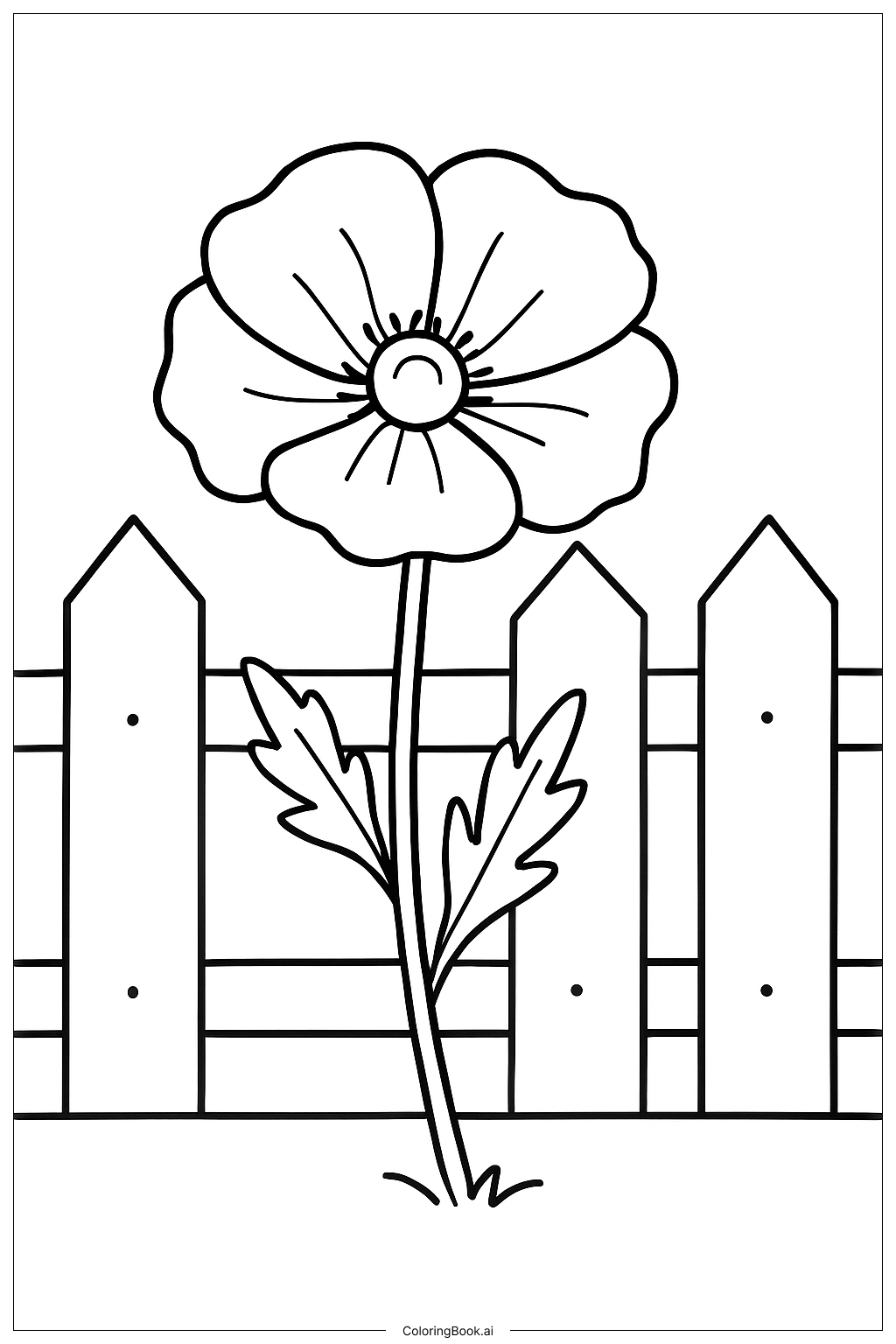
Coloring tips: How to color Poppy Flower And A Picket Fence coloring page well?
For the poppy flower, consider using vibrant reds or oranges for the petals, which are the most common poppy colors. You could also try pink, yellow, or even purple for a creative twist. The center seedpod works beautifully in dark green or black, with yellow or orange stamens radiating outward. Color the stems and leaves in various shades of green, using lighter tones for younger growth and deeper greens for mature leaves. For the picket fence, classic white is traditional, but you could experiment with soft pastels like sky blue, pale yellow, or mint green for a cottage garden feel. Consider adding subtle brown or gray shading to the fence to create a weathered wood effect. The background can be left white or filled with a light blue sky and perhaps hints of grass in soft green tones.
Coloring challenges: Which parts are difficult to color and need attention for Poppy Flower And A Picket Fence coloring page?
• Petal Shading and Dimension: The poppy's large, delicate petals require careful color blending to create a realistic three-dimensional appearance. Each petal has natural folds and curves that catch light differently, so you will need to use lighter shades where light hits and darker tones in the creases and shadows. This gradual color transition can be challenging, especially when working with colored pencils or crayons that require layering techniques.
• Intricate Flower Center Details: The seedpod and stamens in the poppy's center contain very fine lines and small spaces that demand precision and patience. Coloring these tiny elements without going outside the lines requires a steady hand and possibly sharp, fine-tipped coloring tools. The radiating pattern of the stamens needs consistent coloring to maintain visual harmony.
• Fence Texture and Consistency: Creating a realistic wood grain effect on the picket fence planks involves careful line work and subtle color variations. Each fence slat should maintain consistent coloring while also showing individual character. Adding dimension to make the fence appear three-dimensional rather than flat requires understanding light sources and applying highlights and shadows appropriately.
• Leaf Vein Details: The poppy leaves feature detailed vein patterns that require precision coloring. These thin lines can be difficult to color accurately, and maintaining contrast between the veins and the leaf surface while keeping colors natural-looking presents a moderate challenge for younger colorists.
Benefits of coloring books: Advantages of drawing Poppy Flower And A Picket Fence coloring page
Coloring this poppy and fence scene offers wonderful benefits for young artists. The large petals provide excellent practice for color blending and shading techniques, helping children understand how light and shadow create depth. The repetitive pattern of the fence slats develops focus and patience while teaching consistency in coloring. Working on the intricate flower center improves fine motor skills and hand-eye coordination, which are essential for writing and other detailed tasks. The natural subject matter encourages children to observe real flowers and gardens, connecting art with nature appreciation. This image also allows creative freedom in color choices, boosting confidence and self-expression. Completing this moderately detailed scene provides a strong sense of accomplishment, especially when the finished piece captures the cheerful beauty of a garden setting.